Water damage to kitchen cabinets can develop quickly after a sink leak, appliance failure, burst pipe, or flooding event. Some cabinet materials can be dried and restored, while others may swell, separate, or lose strength after absorbing water. The right decision depends on the material, how long it stayed wet, and whether moisture reached the flooring, walls, or hidden spaces around the cabinets.
What Causes Water Damage to Kitchen Cabinets?
Kitchen cabinets can be exposed to water from several common sources.
A leaking sink or supply line may slowly wet the cabinet base without being noticed. Dishwashers can leak from hoses, seals, or connections, while refrigerator water lines may release moisture behind or beside nearby cabinets.
Burst pipes can cause more sudden and widespread damage, especially during cold weather. Frozen Pipes: How to Prevent Them and What to Do Before They Burst explains how winter plumbing failures can send water into cabinets, floors, walls, and other hidden areas.
Flooding from another room or a larger plumbing problem can also affect cabinets from below, even when the source is not located directly inside the kitchen.
Signs of Water-Damaged Cabinets
Water damage is not always obvious at first. Some materials absorb moisture internally before major surface changes appear.
Common signs include:
- swelling around cabinet bases or edges;
- bubbling or lifting finishes;
- dark stains or discoloration;
- persistent damp or musty odors;
- soft or weakened material;
- peeling veneer or laminate;
- delamination between layers;
- doors or drawers that no longer close properly.
Changes in shape are especially important. If panels begin to bow, expand, or separate, the material may have absorbed more water than can be removed through simple drying.
Can Water-Damaged Cabinets Be Dried?
Whether a cabinet can be saved depends largely on what it is made from.
Solid wood often has the best chance of being dried and restored if the damage is identified early. Some swelling or surface changes may improve as moisture levels return to normal.
Plywood can also tolerate limited moisture exposure, but repeated wetting may cause layers to separate.
MDF is much more sensitive to water. Once it absorbs moisture, it can swell, soften, and lose its original shape.
Particleboard is especially vulnerable because it may expand or crumble after becoming saturated.
Drying success also depends on exposure time. Cabinets that were wet for a short period are more likely to be recoverable than materials that remained saturated for days.
When Do Cabinets Need to Be Replaced?
Replacement may be necessary when water has caused permanent physical changes.
Cabinets may be too damaged to restore if panels are heavily swollen, soft, warped, or separating. Delaminated plywood, crumbling particleboard, or MDF that has expanded significantly may not return to its original condition after drying.
Replacement should also be considered when moisture has remained trapped for an extended period or when mold has affected porous cabinet materials.
Structural function matters as well. If shelves, bases, hinges, or fasteners no longer hold securely because the material has weakened, drying alone may not be enough.
Check the Flooring Around Damaged Cabinets
Cabinet damage rarely occurs in isolation.
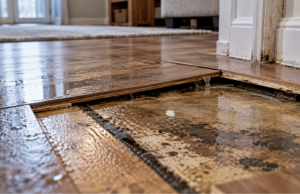
Water can move beneath toe kicks, flooring, and nearby appliances before it becomes visible. Even when the cabinet surface begins to dry, moisture may remain trapped under the floor.
Check for warping, soft areas, discoloration, loose flooring, or unusual odors around the damaged section. Water Damage Under Flooring: Signs of Hidden Moisture You Should Not Ignore explains how to recognize moisture that may be hidden below the surface.
What to Do After Finding Water Damage in the Kitchen
Start by stopping the source of the water. Repair the leaking pipe, appliance connection, sink, or other problem before beginning restoration.
Remove standing water and empty affected cabinets so surfaces can be inspected and dried properly. Check cabinet bases, side panels, shelves, backs, and areas around appliances.
Inspect nearby flooring and walls as well. Water often travels farther than the visible stain suggests.
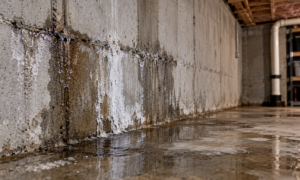
Dry the affected area as soon as possible and continue monitoring for changes in shape, softness, or odor. A persistent musty smell can indicate moisture that has not fully dried. Similar odor-related moisture problems are discussed in Why Does My Basement Smell Musty? Hidden Moisture, Mold and What to Do.
If materials remain wet, continue to swell, or develop visible mold, professional moisture inspection may be needed to determine which components can be saved and which should be removed.
The key is to address both the damaged cabinets and the moisture around them. Stopping the leak without checking the floor, wall, or cabinet structure can leave hidden water behind and allow the problem to continue.