01
Emergency Floodwater Extraction
Remove standing water from basements, ground floors and other affected areas when safe to enter.

Flooded basements, overflowing rivers, heavy rainfall and storm-driven water can damage floors, walls, wiring and belongings. Quality Cleaning & Restoration Inc. provides flood damage cleanup, water extraction, structural drying and repairs for residential and commercial properties in Greenfield, MA and our surrounding service region.
 Flood-Related Interior Water Damage
Flood restoration starts with identifying water hazards and removing water, but it also requires contamination assessment, moisture monitoring, cleaning and repairs where damaged materials cannot be recovered.
Remove standing water from basements, ground floors and other affected areas when safe to enter.
Assess the likely source of floodwater and select cleanup methods based on contamination risks.
Remove saturated drywall, insulation, flooring or other materials that cannot be safely restored.
Use professional drying equipment and ongoing moisture measurements to help dry the structure.
Clean salvageable surfaces and apply suitable sanitation or odor-control procedures as indicated.
Repair or replace affected materials and finishes after mitigation and drying are complete.
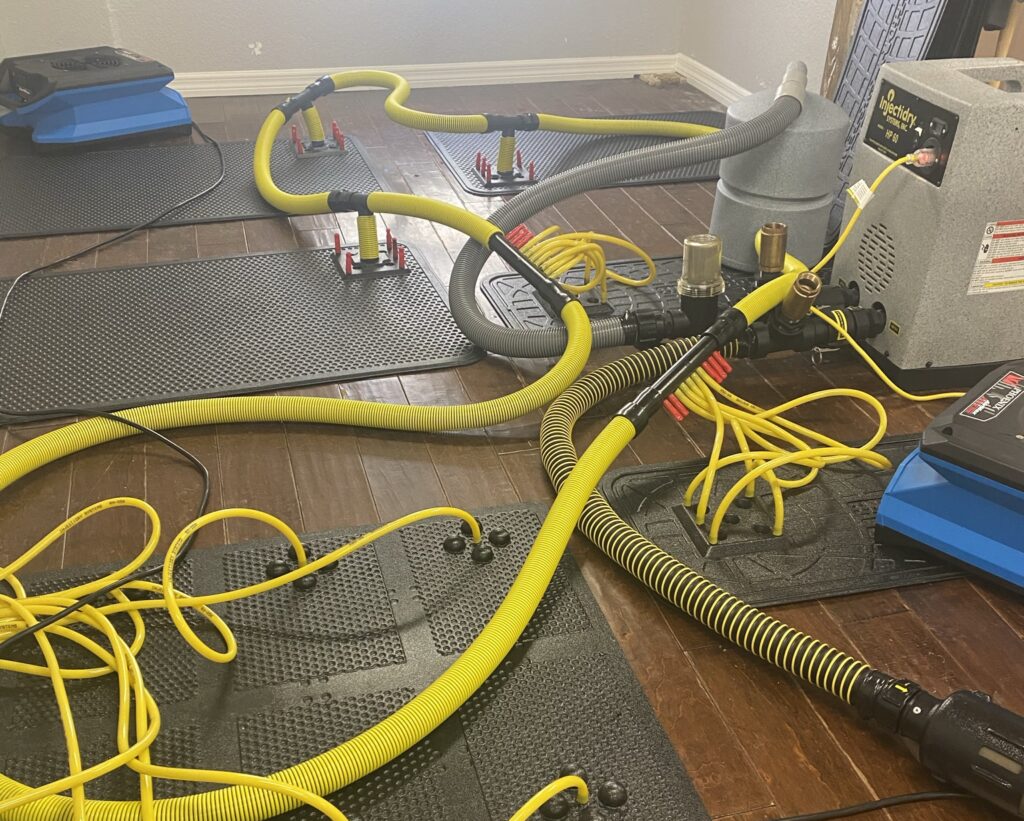
Floodwater can penetrate the lower portions of drywall, subfloors, insulation and stored belongings. Even after the visible water has been pumped out, moisture can remain in the building and contribute to swelling, deterioration and mold growth.
Water from rivers, surface runoff and other outdoor flooding may contain soil, sewage or other contaminants. That changes which materials can be cleaned and which may require removal. Never assume floodwater is safe to enter.
We assess affected areas, remove water where safe, document moisture conditions and determine the necessary drying and cleaning plan. Learn more about our water damage restoration work for plumbing leaks and other water losses.
If a storm caused the flood, we can also coordinate storm damage stabilization such as emergency board-up and roof protection when needed.
A staged response that evaluates water contamination, removes unsalvageable materials and checks the structure before repairs.
Check access, electrical hazards, structural concerns and the likely contamination level of the floodwater.
Remove standing water with suitable extraction equipment after the area is safe to enter.
Identify water-affected flooring, walls, insulation and hidden building cavities.
Remove materials that cannot be cleaned or dried appropriately given the water source and damage.
Set up equipment and monitor moisture levels until appropriate drying targets are reached.
Clean and treat the affected structure according to the condition and contamination involved.
Replace damaged finishes and building components to complete the approved restoration scope.
Quality Cleaning & Restoration Inc. serves homeowners, landlords and businesses throughout our New England service region from our base in Greenfield, Massachusetts.
Spring snowmelt, intense downpours, storms and basement drainage failures can all cause costly water intrusion. Our IICRC-certified team assesses both the immediate flooding and the moisture that may remain hidden afterward.
We coordinate extraction, drying, cleanup, repair planning and documentation that can be shared with insurance representatives. We do not promise that every material can be saved or that every flood loss is covered by insurance.
Based in Greenfield, MA, we assist homeowners and businesses affected by basement flooding and water intrusion across our service region in Massachusetts, Vermont, Connecticut and New Hampshire.
Answers to common questions about flood damage restoration services, planning and property recovery.
Do not enter floodwater if electrical or structural hazards are possible. Avoid contact with potentially contaminated water, photograph the damage from a safe location and call a restoration professional. If the building is unsafe, follow emergency authorities’ instructions.
Often, yes. Floodwater from outside the building may contain contaminants that affect which cleaning and removal procedures are appropriate. A clean-water plumbing leak is assessed differently from surface-water or sewage-contaminated flooding.
Some materials may be restored, while porous materials exposed to contaminated floodwater or extensive saturation may require replacement. The decision depends on the water source, duration of exposure and material condition.
Water extraction and drying may take several days or longer depending on contamination, affected materials and moisture levels. Any demolition, reconstruction or specialty repairs will extend the project timeline.
Standard homeowners insurance often treats rising surface-water flooding differently from a sudden plumbing leak. Flood insurance or other specific coverage may be required. Check your policy and insurer; we can provide restoration documentation.
Floodwater can leave contamination and hidden moisture behind walls and floors. Call Quality Restoration to discuss extraction, cleanup, structural drying and the next steps toward safe recovery.
Read Google reviews from customers who have trusted Quality Cleaning & Restoration with their property restoration needs.


