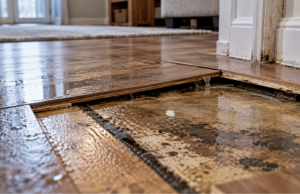
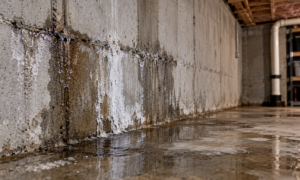
A leak may look minor once the visible water is wiped away, but moisture can remain inside the property long after the surface appears dry. Water does not stay only where it is first seen. It can move under flooring, behind baseboards, into wall cavities, above ceilings, beneath cabinets, and through insulation. This hidden moisture is one of the main reasons small leaks turn into mold growth, structural damage, odors, and costly repairs.
Why Hidden Moisture Is Easy to Miss
After a pipe leak, appliance overflow, roof leak, or plumbing failure, the visible water is usually only part of the problem. Drywall, wood, insulation, subflooring, and trim can absorb moisture quickly. Some materials may feel dry on the outside while holding water inside. In other cases, moisture travels to nearby rooms through seams, framing, or flooring layers before any stain or odor appears.
This creates a false sense of safety. A homeowner may clean the floor, open a window, and assume the problem is solved. In reality, damp materials may still be trapped behind finished surfaces. Without proper detection, the leak may leave behind conditions that continue damaging the building for days or weeks.
Warning Signs That Moisture May Still Be Present
Hidden moisture does not always show up immediately. The first signs may appear gradually, especially if water has moved into enclosed spaces. A musty smell, soft drywall, peeling paint, swollen baseboards, warped flooring, ceiling stains, or increased humidity can all point to moisture that has not been fully removed.
Some warning signs are easy to overlook:
- a room that feels damp after cleanup;
- paint or wallpaper beginning to bubble;
- wood flooring that cups or separates;
- trim that pulls away from the wall;
- dark spots near corners or baseboards;
- recurring odor near the leak area.
These signs should not be treated as cosmetic issues. They often mean moisture has spread beyond the visible area and needs professional inspection.
Why Guesswork Can Be Expensive
The biggest risk after a leak is assuming that dry-looking surfaces are actually dry. Moisture trapped inside walls, floors, or ceilings can lead to mold growth, damaged insulation, weakened wood, and deterioration of building materials. It can also make future repairs more expensive because damage continues while the source looks resolved.
Painting over a stain, replacing flooring too early, or closing a wall before moisture levels are checked can trap water inside the structure. This may cause the same problem to return later as odor, staining, mold, or material failure. Proper restoration depends on knowing exactly where the moisture is and whether affected materials can be dried safely.
How Professional Detection Works
Professional moisture detection helps identify the full path of water. Restoration specialists use tools such as moisture meters, thermal imaging, hygrometers, and controlled inspections to find damp areas that are not visible from the surface. These tools help determine whether water has reached drywall, framing, subfloors, insulation, cabinets, or adjoining rooms.
Detection is not only about finding moisture. It also helps create a drying plan. Different materials dry at different speeds, and some may need removal if they are too damaged or contaminated. Professional monitoring confirms whether drying equipment is working and whether the structure has returned to safe moisture levels.
When Professional Help Is Needed
Professional detection is especially important when the leak affected walls, hardwood floors, ceilings, basements, cabinets, crawl spaces, or rooms with poor ventilation. It is also needed when water has been present for several hours, when the source was a burst pipe or appliance overflow, or when musty odor appears after cleanup.
Quality Restoration helps homeowners and businesses respond to leaks with water removal, moisture detection, structural drying, cleanup, and restoration services. Fast inspection can prevent hidden moisture from becoming a larger problem and helps protect floors, walls, ceilings, and indoor air quality.
The Real Problem Is What You Cannot See
Visible water damage is only the beginning. The most serious problems often develop behind the surface, where moisture remains unnoticed. Professional detection matters because it replaces guesswork with accurate information. Finding moisture early, drying the structure correctly, and confirming safe conditions can prevent mold, odors, structural damage, and repeated repairs.
After any leak, the safest approach is to treat the property as more than visually wet or dry. Hidden moisture needs to be located, measured, and removed before the damage spreads.