Mold behind drywall can develop when moisture becomes trapped inside a wall cavity. Unlike visible growth on painted surfaces, hidden contamination may remain unnoticed until odors, staining, or material deterioration appear.
Recognizing possible warning signs and identifying the moisture source are essential steps toward resolving the problem.
What Are the Signs of Mold Behind Drywall?
Hidden mold does not always produce visible symptoms. However, certain changes may indicate moisture problems inside a wall.
Common warning signs include:
- Persistent musty odors near a particular wall.
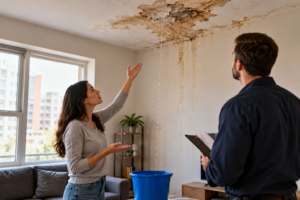
- Yellow or brown water stains.
- Bubbling paint or peeling wallpaper.
- Softened, swollen, or deteriorating drywall.
- Repeated dampness after rain or plumbing use.
These signs do not necessarily confirm mold. Moisture, staining, and odors can have multiple causes.
An inspection is needed to determine whether mold is present and which materials have been affected.
What Causes Mold to Grow Inside Walls?
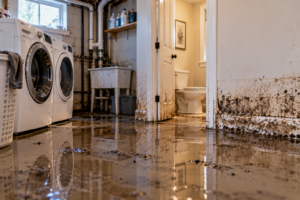
Mold requires moisture to develop. Wall cavities can retain water after plumbing failures, roof leaks, or flooding.
Common sources include leaking supply pipes, drainage problems, exterior water intrusion, and condensation on cold surfaces.
A wall may appear dry from the outside while insulation or the back of the drywall remains damp.
This is particularly relevant after a water damage incident when affected materials have not been thoroughly dried.
Even if visible staining disappears, the original moisture problem may remain unresolved.
How Do Professionals Check for Hidden Mold?
A professional evaluation generally begins with reviewing the property’s water damage history and inspecting areas with visible moisture symptoms.
Moisture meters and thermal imaging may help locate suspicious areas, although these tools do not directly identify mold.
When warranted, targeted investigation may be necessary to examine concealed materials.
The assessment should focus on confirming moisture conditions, identifying affected surfaces, and determining whether additional remediation is needed.
Unnecessary demolition can disturb contaminated materials and spread dust into occupied spaces.
What Should You Do If Mold Is Found Behind Drywall?
Avoid cutting open or removing potentially contaminated drywall without appropriate precautions.
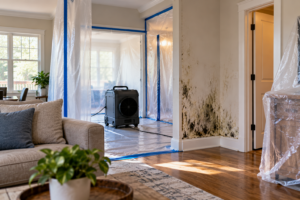
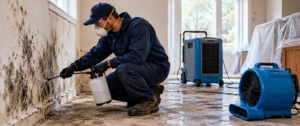
Depending on the extent of the problem, remediation may involve isolating the work area, removing damaged porous materials, cleaning remaining surfaces, and correcting the moisture source.
Homeowners should also discuss staying at home during mold remediation before work begins, particularly when several rooms or essential living spaces may be affected.
Painting over the surface or spraying disinfectant into a wall cavity will not reliably address contamination within damaged materials.
Address Hidden Mold at the Source
Hidden mold problems require more than cosmetic repairs.
Quality Restoration provides mold damage restoration services to help identify affected building materials and address moisture-related damage. Contact the team to discuss suspicious wall conditions and appropriate restoration options.