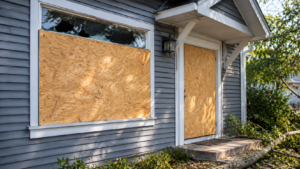
Emergency roof tarping is a temporary measure used to protect a damaged roof from additional rain and weather exposure. It is often necessary after high winds, falling branches, or severe storms create openings in roofing materials.
A properly installed tarp can help limit water intrusion while permanent repairs are arranged. However, roof tarping does not repair structural damage and should never be treated as a long-term replacement for a functioning roof.
When Does a Damaged Roof Need Emergency Tarping?
Roof tarping may be necessary when part of the roofing system can no longer adequately prevent water from entering the building.
Common situations include:
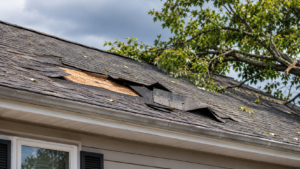
- Missing shingles. Strong winds may remove roofing materials and expose underlayment or roof decking.
- Fallen trees or branches. Impact damage can create holes or compromise roofing components.
- Damaged flashing. Loose or displaced flashing around chimneys, vents, and roof transitions may allow water intrusion.
- Storm-related openings. Windborne debris can puncture roofing materials and expose the building interior.
- Incomplete emergency repairs. Damaged sections may need temporary covering while suitable replacement materials are obtained.
Not every roof leak requires a tarp. Some problems can be addressed through localized repairs, while severely damaged structures may require additional evaluation before temporary protection can be installed.
Homeowners should not climb onto a storm-damaged roof to investigate the problem. Wet surfaces, weakened decking, and hidden structural defects can create serious fall hazards.
How Does Emergency Roof Tarping Protect a Property?
The primary purpose of roof tarping is to reduce additional water intrusion.
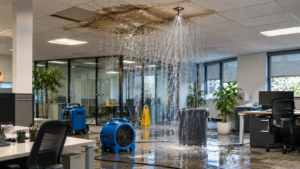
When rain enters through damaged roofing, moisture can spread through attic insulation, ceiling materials, wall cavities, and flooring.
Even a relatively small roof opening can allow water to affect multiple building components over time.
Temporary covering may help protect:
- Attic insulation and roof decking.
- Drywall and ceiling finishes.
- Interior flooring and furnishings.
- Stored belongings in upper floors or attics.
- Building materials awaiting permanent repair.
However, a tarp cannot guarantee complete protection. Wind, additional storms, and movement of damaged roofing materials can affect its performance.
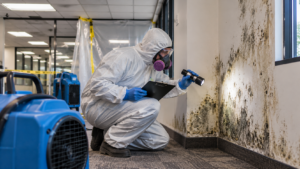
Water already trapped inside the building may also require extraction, drying, or removal of damaged materials.
What Happens During Professional Roof Tarping?
The first step is evaluating whether the damaged roof can be accessed safely.
If there are indications of structural instability, emergency personnel or qualified specialists may need to assess the building before work begins.
When temporary covering is appropriate, the general process includes:
- Identifying the damaged roof sections and exposed materials.
- Determining the area that requires temporary protection.
- Selecting suitable covering materials.
- Securing the tarp using methods appropriate for the roof.
- Checking the installation for visible gaps and potential movement.
The exact installation approach depends on roof construction, slope, accessibility, and the extent of the damage.
Improper installation can damage roofing materials or create additional openings, which is why temporary protection should be handled by qualified personnel.
What Should Homeowners Do Before Roof Tarping?
After a storm, inspect the building only from safe locations.
Look for missing roofing materials, broken branches, wet ceilings, or water entering the attic. Avoid areas with downed electrical lines or visible structural damage.
If water is entering the building, protect unaffected belongings when it is safe to do so.
Photograph visible damage and record the date of the storm. These records may help explain the event to an insurance company.
Homeowners should also review insurance coverage for wind-damaged roofs, including any relevant deductibles, exclusions, and requirements for documenting emergency repairs.
Keep receipts for temporary protection, inspections, and related work.
How Long Can a Temporary Roof Tarp Stay in Place?
There is no universal period during which every roof tarp remains effective.
Its useful life depends on the material, installation, roof conditions, and exposure to wind, sunlight, and rain.
A covering that remains secure during mild weather may become damaged during another storm.
Temporary protection should be inspected when safe, especially after strong winds or heavy rainfall.
If the tarp shifts, tears, or develops openings, further temporary protection may be required.
Permanent roof repairs should be arranged as soon as practical rather than waiting for the tarp to deteriorate.
Can Roof Tarping Prevent Interior Water Damage?
Roof tarping can reduce additional water intrusion, but it cannot reverse damage that has already occurred.
Wet insulation, drywall, or flooring may retain moisture even after the damaged roof is covered.
These materials may require assessment and drying to prevent further deterioration.
The most effective storm recovery approach combines appropriate temporary protection, evaluation of interior moisture, and permanent roof repairs.