Fire sprinkler water damage can occur when a sprinkler head is accidentally damaged, a system component leaks, or sprinklers activate during a fire. The resulting water release may affect ceilings, flooring, office equipment, inventory, and other building materials.
Property managers must respond quickly while keeping fire protection systems and occupants safe. The appropriate response combines emergency procedures, coordination with qualified sprinkler professionals, and assessment of affected building areas.
What Causes Fire Sprinkler Water Damage?
Fire sprinkler systems are important safety features in commercial buildings. However, several situations can result in unexpected water discharge.
- Accidental impact. Moving equipment, construction materials, or stored objects may damage a sprinkler head.
- Freezing temperatures. Water trapped in vulnerable sections of a system may freeze and contribute to damaged pipes or fittings.
- Corrosion. Certain components can deteriorate over time and develop leaks.
- Maintenance incidents. Problems during authorized inspection or repair work can result in unintended water release.
- Fire activation. Sprinklers operating during an actual fire may cause additional water damage while helping control the emergency.
The cause should be established by qualified personnel. An unexpected discharge does not necessarily mean that the entire system is defective.
What Should Property Managers Do Immediately?
Safety should remain the first priority.
Keep occupants away from standing water, damaged electrical equipment, and ceilings showing signs of sagging or instability.
If a fire alarm has activated or a fire is suspected, follow the building’s emergency procedures and contact emergency services.
Property managers should then coordinate the response:
- Notify authorized building personnel and the fire protection service provider.
- Restrict access to affected rooms.
- Arrange appropriate assessment of the sprinkler system.
- Document visible water damage from safe locations.
- Identify affected inventory, equipment, and building materials.
- Arrange water damage assessment and mitigation.
Do not disable or modify fire protection equipment without appropriate authorization and qualified assistance.
The sprinkler contractor should determine how the system can be safely repaired, tested, and returned to service.
How Is Fire Sprinkler Water Damage Restored?
The restoration process depends on the volume of released water, the source, the materials affected, and the time moisture remained inside the building.
Standing water may collect on floors and spread into nearby rooms. Water can also travel through ceiling assemblies, wall cavities, and openings around building systems.
Common restoration stages include:
- Water extraction. Removing standing water from affected areas.
- Moisture assessment. Measuring moisture in flooring, drywall, ceilings, and other building materials.
- Structural drying. Using appropriate drying equipment to reduce moisture in restorable materials.
- Material removal. Removing damaged ceiling tiles, insulation, or other materials that cannot be adequately restored.
- Cleaning and repairs. Addressing contamination and completing necessary restoration work.
Water released from a sprinkler system should not automatically be assumed clean. Its condition may depend on the system, the incident, and materials contacted during discharge.
What Problems Can Develop After Sprinkler Water Damage?
One of the main concerns is moisture remaining inside concealed building spaces.
Water may penetrate ceiling insulation, drywall, flooring systems, and wall cavities before it becomes visible elsewhere.
Even after standing water is removed, these materials may remain damp.
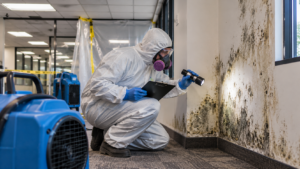
Prolonged moisture exposure can contribute to deterioration, unpleasant odors, and mold risks in commercial buildings, particularly when porous materials remain wet.
Moisture monitoring helps establish whether affected building components have been adequately dried.
Electrical equipment and sensitive machinery also require special consideration. Water-exposed devices should not be powered on before qualified specialists assess their condition.
How Can Property Managers Minimize Business Disruption?
Restoration work should be coordinated with building management, the fire protection contractor, and affected occupants.
Where safe and practical, restoration may be organized around restricted work zones to reduce interference with unaffected areas.
Important considerations include:
- Maintaining safe evacuation routes.
- Providing clear updates to employees and tenants.
- Protecting unaffected inventory and equipment.
- Coordinating sprinkler system repairs and restoration work.
- Documenting affected areas before reopening.
Normal operations should resume only when relevant safety and restoration requirements have been addressed.
Will Insurance Cover Fire Sprinkler Water Damage?
Coverage depends on the insurance policy and the circumstances of the incident.
Accidental sprinkler discharge may qualify as a covered loss under certain commercial property policies, while exclusions or specific conditions may apply.
Property managers should document the cause, affected materials, emergency measures, and necessary restoration work.
Maintenance records and reports from qualified sprinkler contractors may also help explain the incident.
How Can Future Sprinkler-Related Water Damage Be Reduced?
Regular inspection, testing, and maintenance by qualified fire protection professionals are important for system reliability.
Building managers should also protect sprinkler heads from accidental impacts and address freezing risks where applicable.
Employees should understand how to report damaged sprinkler components without attempting unauthorized repairs or adjustments.
When unexpected discharge occurs, the essential steps are protecting occupants, preserving fire safety, identifying the water source, and addressing moisture before additional building damage develops.