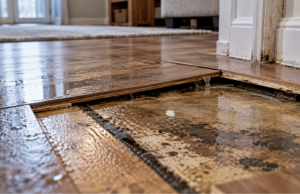
Water seeping through basement walls usually means moisture is building up around the foundation and finding a way inside. The problem may start as a small damp spot, but repeated exposure can affect paint, drywall, flooring, insulation, and other materials. Finding the source early is important because sealing the visible spot alone may not solve the underlying drainage or foundation issue.
Why Is Water Coming Through My Basement Wall?
One of the most common reasons is saturated soil around the foundation. After heavy rain or rapid snowmelt, the ground may hold more water than it can drain.
As moisture builds up, hydrostatic pressure increases against basement walls. Water can then move through small cracks, porous masonry, joints, or other weak areas.
Foundation cracks can make this process easier, but they are not the only cause. Poor grading, clogged gutters, short downspouts, and inadequate drainage can all direct water toward the house.
The problem may become more noticeable during storms or seasonal thawing, when large amounts of water reach the soil in a short period.
Signs of Water Seepage Through Basement Walls
Basement wall leaks are not always obvious. In some cases, moisture appears gradually rather than as active dripping.
Common signs include:
- damp or darker areas on the wall;
- brown or yellow staining;
- peeling or bubbling paint;
- white mineral deposits on masonry;
- moisture near the wall-to-floor joint;
- a persistent musty odor.
White deposits, often called efflorescence, can appear when moisture moves through concrete or masonry and leaves minerals behind as it evaporates.
A musty smell may also point to hidden moisture even when the wall looks mostly dry. See Why Does My Basement Smell Musty? Hidden Moisture, Mold and What to Do for other warning signs of moisture that may be present out of sight.
Is the Problem the Wall or a Foundation Crack?
It can be difficult to tell whether water is moving through the wall itself or entering through a specific crack.
If moisture appears in a narrow line, becomes visible along a crack after rain, or repeatedly affects the same small area, a foundation crack may be the main entry point.
Broader dampness across a larger section of wall may be more closely related to porous masonry, exterior waterproofing problems, or pressure from saturated soil.
The exact source matters because different problems require different repairs. Foundation Crack Leaks: When a Small Crack Becomes a Water Damage Problem explains how cracks can become active leak paths when groundwater pressure rises.
Why Basement Wall Leaks Get Worse During Snowmelt
Snowmelt can put significant pressure on basement walls, especially after a winter with heavy snow accumulation.
When temperatures rise quickly, melting snow may saturate the ground around the home faster than the soil can absorb or drain the water. If the ground is still partially frozen, runoff may remain close to the foundation instead of moving deeper into the soil.
This can increase hydrostatic pressure and push moisture through weak areas in basement walls or foundation joints.
For a closer look at this seasonal problem, see Basement Flooding From Snowmelt: Causes, Warning Signs and Prevention.
What to Do When Water Is Seeping Into the Basement
Start by identifying where the moisture is appearing and when it becomes worse. Note whether the problem happens during heavy rain, snowmelt, or periods of high groundwater.
Check gutters, downspouts, grading, window wells, and visible foundation cracks outside the home. Water should be directed away from the foundation whenever possible.
Inside the basement, remove standing water and dry affected areas as soon as possible. Wet drywall, insulation, flooring, or stored materials should be inspected to determine whether they can be dried effectively.
Do not assume the problem is solved just because the wall surface looks dry. Moisture may remain behind finishes or inside porous materials.
If water continues to return, the source should be investigated rather than repeatedly painting or sealing the same interior area.
How to Prevent Water From Coming Through Basement Walls
Prevention usually involves managing water before it reaches the foundation.
Keep gutters clear and make sure downspouts carry water far enough away from the house. Soil around the property should slope away from the foundation so rain and melting snow do not collect near basement walls.
Visible foundation cracks should be inspected and repaired where necessary. Recurring seepage may also require exterior or interior waterproofing, depending on the source and severity of the problem.
Drainage systems and sump pumps can provide additional protection in homes where groundwater frequently rises around the foundation.
The best solution depends on how the water is entering. Improving drainage, correcting grading, maintaining the foundation, and addressing waterproofing problems together can significantly reduce the chance of basement wall leaks returning.