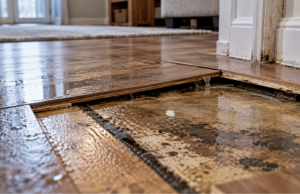
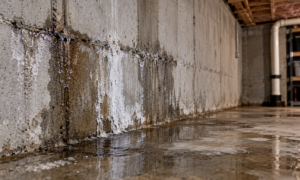
Snowmelt can create serious basement water problems, especially after a winter with heavy snow accumulation. When temperatures rise, large amounts of water may enter the soil around a home in a short period. If the ground is already saturated or drainage is poor, that moisture can move toward the foundation and eventually reach the basement.
Why Snowmelt Can Flood a Basement
The risk of basement flooding increases when melting snow saturates the soil around the foundation faster than the ground can absorb or drain the water.
As moisture builds up in the soil, hydrostatic pressure can increase against basement walls and floors. Water may then move through small cracks, porous masonry, joints, or other weak points in the foundation.
The process often follows a simple pattern: snow melts, the surrounding soil becomes saturated, pressure around the foundation rises, and water finds a path into the basement.
This is why flooding may occur even when there is no heavy rain. A rapid temperature increase after a snowy winter can release a large amount of water around the home within a short time.
Common Ways Snowmelt Enters a Basement
Snowmelt can reach the basement through several different areas.
Foundation cracks are one of the most common entry points. Even small openings can allow moisture through when the soil outside is saturated.
Water may also move directly through basement walls, especially when masonry is porous or waterproofing has deteriorated. See Water Seeping Through Basement Walls: Common Causes and What to Do for more information about this type of moisture problem.
Window wells can also collect melting snow and water if drainage is blocked or inadequate. Poor grading around the home may direct runoff toward the foundation instead of away from it.
Foundation damage can make these issues worse. Foundation Crack Leaks: When a Small Crack Becomes a Water Damage Problem explains how cracks may become active leak points during periods of heavy groundwater pressure.
Early Warning Signs Before a Basement Floods
A basement does not always flood without warning. Smaller moisture problems may appear first and become more noticeable as snowmelt increases.
Common warning signs include:
- damp areas on walls or floors;
- a persistent musty odor;
- dark or discolored wall stains;
- small puddles near foundation walls;
- white mineral deposits on concrete or masonry;
- peeling paint or bubbling finishes.
A musty smell can be especially important because it may indicate hidden moisture even before standing water appears. See Why Does My Basement Smell Musty? Hidden Moisture, Mold and What to Do for other signs that water may be accumulating out of sight.
Paying attention to these early changes can make it easier to identify the source before the problem becomes a larger flood.
What to Do After Snowmelt Water Enters Your Basement
If snowmelt water enters the basement, the first step is to determine where it is coming from.
Check foundation walls, floor joints, window wells, plumbing areas, and locations where water appears to be collecting. If active water is still entering, stopping or reducing the source should be the priority where it can be done safely.
Standing water should be removed as soon as possible. After that, affected walls, flooring, insulation, and stored materials need to be inspected and dried.
Moisture can remain hidden beneath flooring or behind finished walls even after the visible water is gone. Damaged materials that cannot be dried effectively may need to be removed.
The area should also be checked for signs of mold, especially if water has been present for an extended period or the basement already had high humidity.
How to Reduce the Risk of Snowmelt Flooding
Reducing the risk of snowmelt flooding starts outside the home.
Gutters and downspouts should be kept clear and should direct water away from the foundation. If downspouts discharge too close to the house, meltwater can collect in the soil directly beside basement walls.
Grading around the property should also slope away from the foundation rather than toward it. Low areas where snow and water collect may need additional drainage improvements.
Foundation walls and visible cracks should be inspected before winter and again after periods of severe weather. Repairing known weak points can reduce the chance of water entering during spring thaw.
A functioning sump pump can provide additional protection in homes where groundwater regularly becomes a problem. The pump and discharge line should be checked before snow begins to melt.
Waterproofing may also be appropriate when basement moisture is recurring. The right solution depends on how and where the water is entering.
Snowmelt flooding is easier to prevent when drainage, foundation condition, and groundwater management are addressed together rather than after water has already entered the basement.